
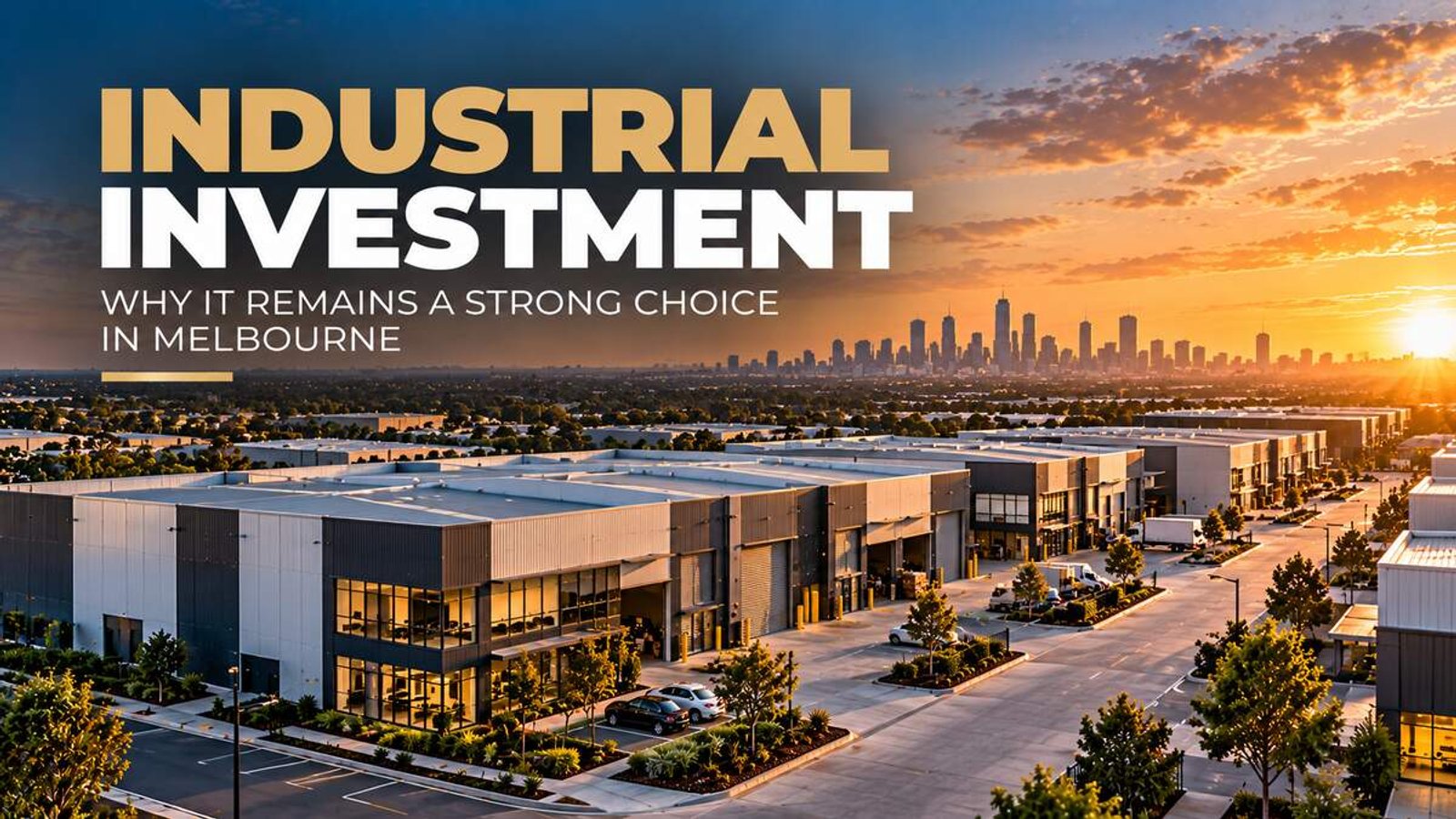
Commercial property decisions benefit from careful questions and sound advice. This guide outlines practical considerations for buyers in Victoria, without assuming that any one property or strategy suits everyone.
Why investors consider industrial property
Warehouses, workshops, logistics facilities and trade premises can serve a broad range of business activities. For some investors, industrial assets offer exposure to business tenants and potentially longer lease arrangements. Outcomes vary considerably by asset, tenant and location.
Location is more than a postcode
Consider access to major roads, freight routes, labour, customers and suppliers. Examine truck access, traffic constraints, local planning controls and the surrounding mix of uses. A desirable location for one industrial business may be impractical for another.
Functionality can determine future demand
Clearance height, roller-door dimensions, hardstand, loading arrangements, floor capacity, power supply, office proportion, parking and site circulation can influence which tenants can occupy a property. Avoid assuming every warehouse is interchangeable.
Read the lease with a long-term view
Review the lease term, options, rent reviews, incentives, outgoings, maintenance responsibilities and security. Assess the tenant’s business and financial position with appropriate professional support. The advertised yield alone does not tell the full story. Understanding commercial property leases before you buy goes further into those documents.
Understand vacancy and reletting risk
Ask how readily the property could accommodate another tenant if the current occupier leaves. Highly specialised improvements may be valuable to one business but less attractive to others. Consider leasing downtime, incentives and capital expenditure in financial scenarios.
Investigate the building and site
Building condition, roofing, drainage, fire systems, access, environmental history and contamination concerns can be material. Older industrial sites may require more targeted investigations. Engage qualified specialists based on the property’s risk profile. A wider checklist is in commercial property due diligence.
Avoid relying on broad market narratives
Market conditions can differ across Melbourne submarkets and property types. Test rental evidence, comparable sales, local supply and demand, and the assumptions behind any projected return. Seek current, property-specific evidence rather than treating general market commentary as a forecast.
Build an acquisition team
Commercial lawyers, finance brokers, accountants, building consultants and environmental specialists may all have a role. Independent buyer representation can help keep the property search and investigation aligned with the investor’s objectives. See our services and our process.
Making a considered decision
Industrial property can be worth considering, but the investment case should rest on the specific site, building, lease and purchase price rather than the asset class label alone.
Considering a commercial property purchase in Victoria? VEN Commercial provides independent, full-service buyer representation, from property search through to settlement coordination. Contact us to discuss your objectives, or browse Commercial Property Insights.
General information only. This article is not legal, financial, tax, planning, engineering or investment advice. Seek qualified advice specific to the property and your circumstances.